
Scaling your business from a handful of clients to a thriving portfolio requires smart strategies and efficient resources. Leveraging remote staff can be one of the most effective ways to achieve rapid growth without overwhelming your operations or budget. By tapping into global talent, you can expand your capacity, improve productivity, and focus on delivering exceptional value to your clients.
Whether you’re looking to streamline administrative tasks or enhance specialized services, remote teams offer flexibility and scalability that traditional hiring often can’t match. Understanding how to integrate and manage remote staff effectively is key to growing from 2 clients to 10—and beyond—while maintaining quality and consistency in your work.
Key Takeaways
Remote staff can help scale your business quickly by increasing capacity, improving productivity, and reducing operational costs without the need for full-time hires or office overhead.
Delegating tasks to remote professionals frees up time for founders to focus on high-value activities like client acquisition, strategy development, and business growth.
Specialized remote roles such as virtual assistants, SEO experts, and paid ads specialists ensure consistent service delivery while enhancing efficiency and quality across projects.
Using tools like SOPs and project management platforms streamlines workflows, reduces micromanagement, and ensures smooth collaboration with remote teams.
Hiring from regions like LATAM offers cost-effective talent pools, aligned time zones, and cultural compatibility for seamless integration into agency operations.
Avoid common pitfalls like delayed hiring or unclear delegation, which can hinder growth; instead, onboard remote staff strategically with proper training and role clarity.
The Growth Ceiling of a 2–3 Client Agency
Running an agency with only two or three clients creates significant operational and growth challenges. Limited resources, inconsistent workflows, and hiring delays can prevent you from scaling effectively.
Founder Burnout and Task Overload
Managing all aspects of client work alone leads to exhaustion. You juggle strategy development, execution, reporting, and client communication without support. This constant multitasking drains energy and reduces focus on high-value activities like business development. Delegating repetitive tasks to remote staff frees up time for strategic priorities.
Inconsistent Delivery Due to Limited Bandwidth
Handling multiple projects simultaneously often results in missed deadlines or subpar quality. With limited team capacity, it’s difficult to maintain consistent service delivery as workloads fluctuate. Remote staff increases your bandwidth by taking over routine tasks such as content creation or campaign monitoring, ensuring better output consistency.
Missed Opportunities Because of Hiring Delays
Traditional hiring processes slow down your ability to onboard new talent when demand spikes. These delays force you to decline potential clients or stretch existing resources thin. Leveraging remote professionals allows faster recruitment and onboarding, enabling you to scale operations quickly without compromising quality.
Why Remote Staff is the Growth Lever Most Agencies Ignore
Remote staff can help you scale faster by eliminating traditional hiring bottlenecks. Many agencies overlook this strategy, missing opportunities to increase capacity and reduce costs.
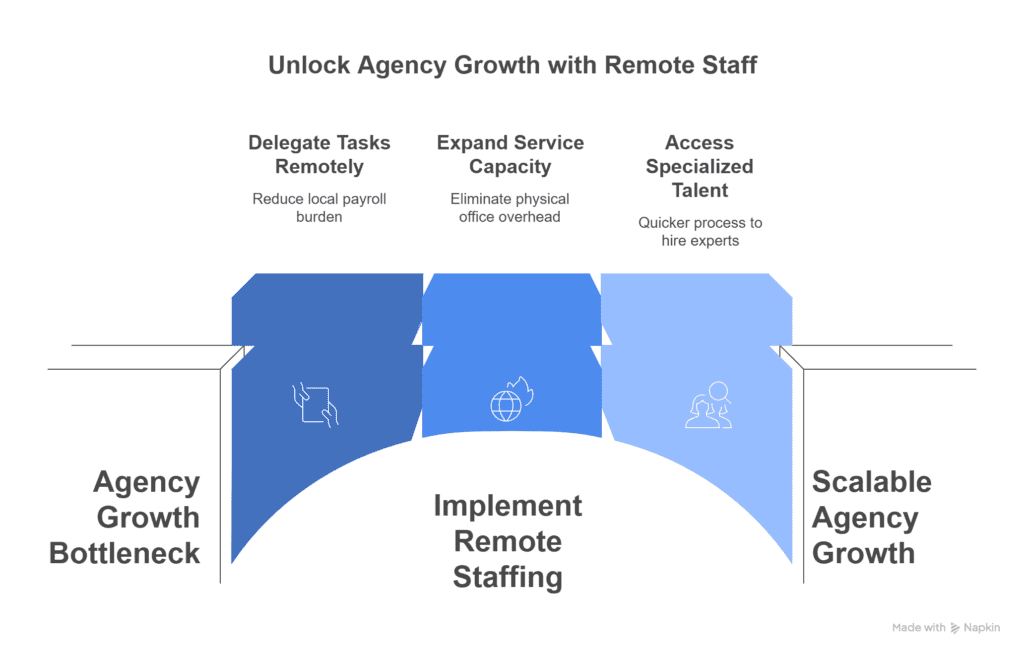
Get More Done Without Full-Time Payroll Burden
Hiring remote professionals lets you delegate tasks without committing to full-time salaries or benefits. This flexibility allows you to allocate resources based on workload fluctuations. For example, a virtual assistant can handle administrative work during busy periods, freeing your time for client acquisition. By avoiding fixed payroll expenses, you improve cash flow while maintaining operational efficiency.
Expand Service Capacity Without Adding Office Overhead
Remote teams eliminate the need for physical office space as they work from their own locations. You can onboard specialists like content writers or developers without investing in desks, utilities, or equipment. This setup keeps overhead low while increasing your ability to take on more projects simultaneously. Scaling becomes cost-effective when growth doesn’t require expanding infrastructure.
Access Specialized Talent On-Demand (Design, SEO, Ads)
Remote staffing platforms provide access to global talent pools with expertise in areas like graphic design, search engine optimization (SEO), and paid advertising campaigns. If a client requests advanced PPC management or custom branding designs, you can hire skilled remote employees immediately instead of training internal local staff. Remote hiring ensures that your agency delivers high-quality results without delays caused by skill gaps within your team.
Key Roles That Unlock Scale from 2 to 10 Clients
Expanding your client base requires the right team. Remote staff can handle critical tasks, freeing you to focus on growth.
Virtual Assistants for Admin, Scheduling, and Invoicing
Virtual assistants streamline repetitive tasks like managing emails, scheduling meetings, and creating invoices. They ensure smooth operations by handling time-consuming administrative work. For example, they can track payment statuses or coordinate calendars across multiple clients. This reduces errors and keeps your processes efficient as client demands grow.
SEO and Content Support to Fuel Inbound Growth
SEO specialists and content writers boost visibility through optimized strategies and engaging materials. They research keywords, update meta tags, write blogs, or create landing pages that attract leads organically. With consistent inbound traffic, you reduce dependency on paid campaigns while building long-term authority in your niche.
Paid Ads Specialists for Client Retention and Results
Paid ads experts design campaigns that deliver measurable ROI for clients. They manage platforms like Google Ads or Facebook Ads to optimize targeting, bidding strategies, and ad creatives. Their expertise ensures better performance metrics such as click-through rates (CTR) or cost-per-acquisition (CPA), which strengthens client trust and retention.
Project Managers or Account Coordinators to Protect Your Time
Project managers oversee timelines, budgets, and deliverables so nothing falls behind schedule. Account coordinators maintain communication with clients by providing updates or addressing concerns promptly. These roles prevent bottlenecks by keeping projects aligned with expectations while allowing you to prioritize scaling efforts over daily management tasks.
Building the Right Remote Team Structure
Scaling from 2 to 10 clients requires a clear, efficient remote team structure. A well-organized framework ensures tasks are completed on time while maintaining quality.
Role Clarity: What You Keep vs What You Delegate
Define your core responsibilities and delegate repetitive or specialized tasks. Focus on high-value activities like client strategy and business development. Assign routine work—such as data entry, content creation, or campaign monitoring—to remote staff with relevant expertise.
For example, let virtual assistants handle scheduling while SEO specialists manage keyword research.
Daily and Weekly Systems to Keep Work Moving
Establish systems that ensure consistent progress across all projects. Use daily check-ins for task updates and weekly reviews for goal alignment. Implement tools like Asana or Trello to track deadlines and priorities in real-time. Schedule recurring meetings with project managers to address bottlenecks before they escalate.
Using SOPs and Looms to Reduce Micromanagement
Create standard operating procedures (SOPs) for recurring processes to maintain consistency without constant oversight. Record video tutorials using Loom for step-by-step guidance on complex tasks. Share these resources with your team so they can operate independently while meeting expectations efficiently.
Where to Find Reliable Remote Staff
Expanding your agency requires access to skilled remote professionals who align with your goals. Knowing where to look ensures you build a team that delivers consistent results.
Hiring from LATAM for Time Zone and Communication Fit
LATAM (Latin America) offers a strong talent pool with professionals fluent in English and aligned with US time zones. Countries like Mexico, Colombia, and Argentina are popular due to their cultural compatibility and cost-effective rates.
Hiring from LATAM simplifies real-time collaboration during standard business hours. Platforms like Workana or Toptal specialize in connecting agencies with vetted LATAM freelancers across roles such as virtual assistants, designers, and developers.
Vetting Platforms vs Using a Specialized Staffing Partner
Freelance platforms like Upwork provide access to global talent but require extensive vetting on your part. Screening portfolios, conducting interviews, and testing skills can be time-intensive when scaling quickly.
Specialized staffing partners handle pre-vetting for you, offering curated matches based on your needs. Services like CloudTask or GrowTal streamline hiring by providing trained experts ready to integrate into your workflows without delays.
Common Pitfalls That Slow Down Growth
Scaling your agency from 2 to 10 clients requires avoiding mistakes that can derail progress. Missteps in hiring, delegation, and onboarding often create bottlenecks that limit growth.
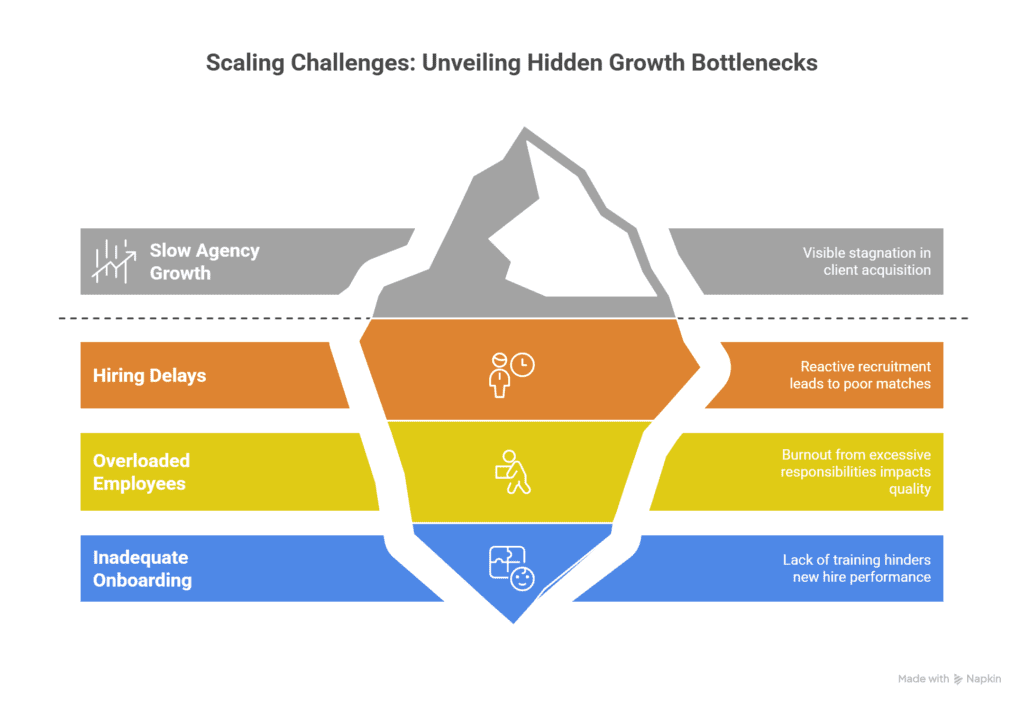
Hiring Too Late or Without Clear Roles
Delaying recruitment until you’re overwhelmed leads to rushed decisions and mismatched hires. Define specific roles before expanding your team. For example, if client communication is suffering, hire an account coordinator instead of overloading existing staff. Use job descriptions that outline key tasks and skills to ensure new hires effectively address gaps.
Expecting One Person to Do Everything
Assigning too many responsibilities to one person can lead to burnout and subpar work quality. Instead of relying on a single generalist for design, SEO, and content writing, divide tasks among specialists. A dedicated designer produces better visuals than someone juggling multiple roles. Specialization ensures higher efficiency and output consistency.
Failing to Train and Integrate New Hires Properly
Skipping structured onboarding leaves remote staff unprepared for their roles. Provide clear SOPs using tools like Loom videos or written guides so they understand workflows immediately. Schedule weekly check-ins during the first month to address questions early. Proper integration minimizes errors and builds confidence in new team members quickly.
The ROI of Scaling with Remote Talent
Scaling your agency with remote talent delivers measurable returns by reducing costs, improving client retention, and freeing up time for growth-focused activities.
Cost-to-Output Ratio Compared to Local Hires
Remote staff offers a lower cost-to-output ratio than local hires. Hiring remote professionals from regions like LATAM can reduce payroll expenses by 30%-50% while maintaining high-quality work. For example, hiring a skilled SEO specialist remotely often costs less than onboarding a full-time local employee with similar expertise.
This allows you to allocate resources toward acquiring more clients or enhancing service offerings without increasing overhead.
Impact on Client Retention and Referral Volume
Remote teams directly impact client satisfaction, which drives retention and referrals. Delegating tasks like content creation or ad management ensures consistent delivery even during demand spikes. Clients notice when deadlines are met without sacrificing quality, leading them to stay longer and recommend your services.
Agencies leveraging remote specialists in areas such as paid ads report improved campaign performance, boosting trust and repeat business.
Freeing Up Founder Time to Sell and Strategize
Delegating operational tasks to remote staff creates space for strategic planning and sales efforts. Instead of managing day-to-day workflows, you can focus on pitching new clients or refining service packages.
For instance, assigning administrative duties to virtual assistants lets you dedicate hours each week to building partnerships or analyzing market trends. This shift accelerates scaling by aligning your time with revenue-generating priorities.
Still Trying to Scale with an Overworked In-House Team?
If you’re serious about growing your agency, trying to do it all with a stretched internal team isn’t just inefficient—it’s a liability. Remote marketing teams aren’t a shortcut; they’re a strategic advantage. They give you access to specialized talent, faster turnaround, and the ability to scale without burning out your core team or blowing up your overhead.
Wow Remote Teams is the smart solution top agencies are already using. As a leading marketing staffing partner, we help you interview pre-vetted talent in just 3 days—so you can fill gaps, move faster, and deliver without compromise.
Still waiting weeks to hire while projects stack up? Book a free strategic call today and stop letting slow hiring hold your agency back.
If you’re not doing this, your competitors already are.
📚 Recommended Reading for Agency Founders
➤ Benefits of Partnering with a Staffing Agency for Digital Marketing Firms
➤ Freelancer vs Remote Staff: What’s Better for Growing Agencies?
➤ Top Roles Digital Marketing Agencies Nearshore to Latin America
➤ How to Overcome Marketing Talent Scarcity for Your Agency
➤ Affordable Remote Staffing Solutions for Agencies Under 10 People
➤ What to Do When You Can’t Hire Fast Enough
➤ Top Remote Roles Every 50-Person Agency Should Have on Call
➤ The Cost of Overhiring vs. Smart Remote Staffing
➤ How to Hire Remote Talent from LATAM for Your Digital Marketing Agency
➤ Outsourcing Creative: What’s Safe to Offload and What’s Not
➤ How to Hire Your First Marketing Team
Frequently Asked Questions
1. Why is leveraging remote staff important for scaling a business?
Leveraging remote staff allows businesses to scale quickly by accessing global talent, reducing hiring delays, and cutting costs. Remote teams provide flexibility, eliminate the need for physical office space, and enable task delegation without full-time payroll burdens. This approach improves efficiency and helps agency owners focus on high-value activities.
2. What challenges do small agencies face when trying to scale?
Small agencies often struggle with limited resources, inconsistent workflows, founder burnout, and hiring delays. These issues can lead to missed deadlines and reduced service quality. Delegating tasks to remote staff helps overcome these challenges by increasing capacity and ensuring consistent delivery.
3. How does hiring remote professionals improve cost efficiency?
Remote professionals typically have a lower cost-to-output ratio compared to local hires. Hiring from regions like LATAM can reduce payroll expenses by 30%-50%. Additionally, eliminating the need for office space further reduces overhead costs while maintaining operational efficiency.
4. What roles are essential for scaling an agency from 2 to 10 clients?
Key roles include virtual assistants for administrative tasks, SEO specialists and content writers for inbound growth, paid ads experts for client retention, and project managers or account coordinators to oversee timelines and communication. These roles ensure smooth operations as the agency scales.
5. How can SOPs help manage remote teams effectively?
Standard Operating Procedures (SOPs) provide clear guidelines that reduce micromanagement and ensure consistency in task execution. They allow team members to work independently while maintaining quality standards, improving overall productivity within the team.
6. What tools are recommended for managing remote teams?
Tools like Asana or Trello are ideal for tracking tasks and aligning goals across remote teams. They help streamline daily updates, monitor progress efficiently, and maintain accountability among team members.
7. What are common mistakes agencies make when expanding their team?
Common pitfalls include hiring too late or without defined roles, overloading employees with multiple responsibilities, and failing to properly train new hires. Specialization and structured onboarding processes prevent inefficiencies during expansion.
8. How does delegating tasks impact client satisfaction?
Delegating routine tasks ensures consistent service delivery even during demand spikes, which fosters trust with clients. High-quality results improve client retention rates and encourage referrals—key factors in growing an agency’s portfolio.
9. Can remote staffing accelerate revenue growth?
Yes! By delegating operational tasks to remote staff, founders free up time for strategic planning and sales efforts—activities directly tied to revenue generation. This alignment accelerates scaling while maintaining service quality.
10. Why should agencies consider specialization when scaling their team?
Specialization enhances efficiency by assigning specific responsibilities based on expertise rather than overburdening individuals with varied tasks. This leads to higher output consistency and better overall performance as the agency grows its client base.