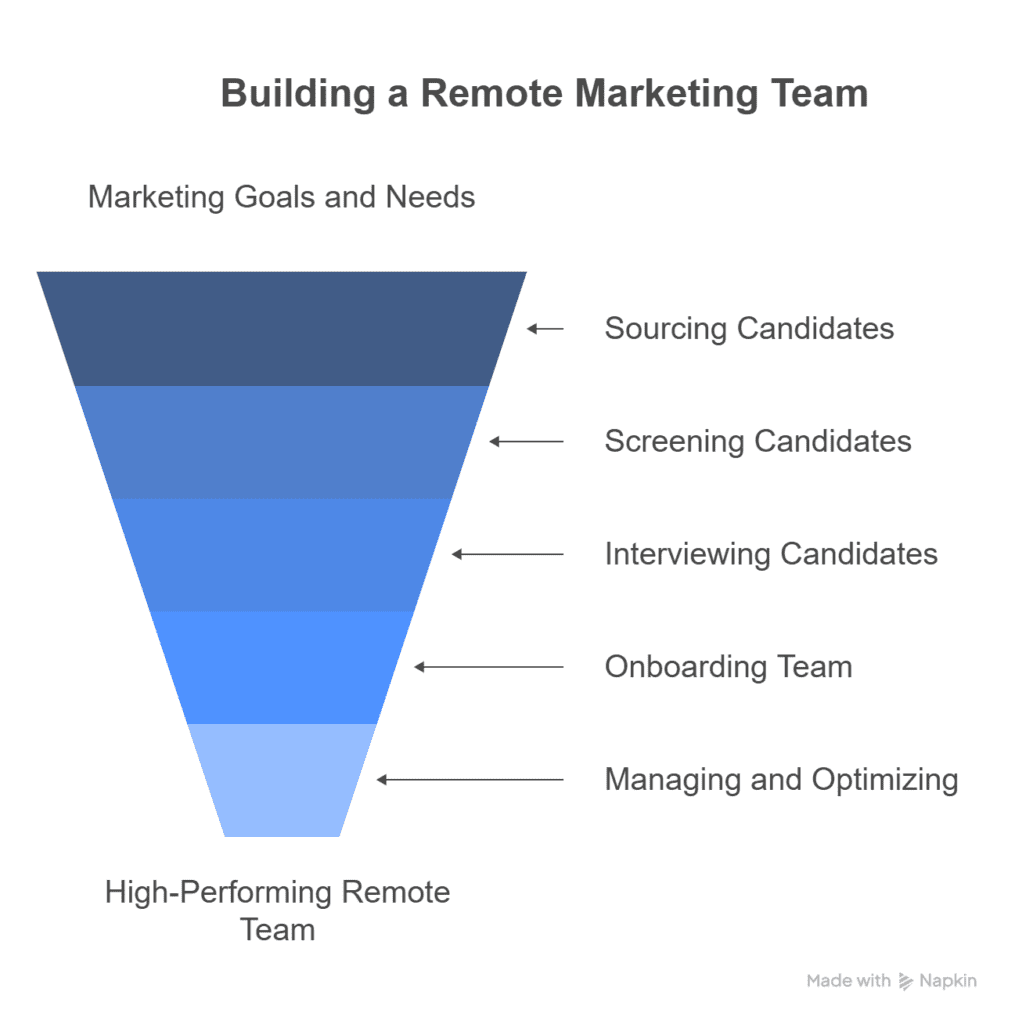
Have you ever wondered how to hire a remote marketing team that can scale your business effectively? To build your first remote marketing team, you need to follow these golden rules:
- Defining Your Marketing Goals and Needs
- Sourcing Candidates for Your Remote Marketing Team
- Screening and Interviewing Remote Candidates
- Onboarding Your Remote Marketing Team
- Managing and Optimizing Your Remote Marketing Team
As remote work becomes more common, businesses are discovering the benefits of tapping into a diverse talent pool. This shift enhances creativity, allowing companies to adapt quickly to market demands.
In this guide, we will explore the steps for hiring, onboarding, and managing your remote marketing team effectively. By grasping the nuances of remote collaboration, you can set your organization up for success in a digital-first environment.
Key Takeaways
- Embrace Global Talent: Hiring a remote marketing team allows access to diverse skills and perspectives, enhancing creativity and innovation in your marketing strategy.
- Define Roles Clearly: Identifying specific roles, such as Content Creator and SEO Specialist, ensures the recruitment of specialized talent essential for achieving your marketing goals.
- Focus on Key Skills: Look for candidates with remote work experience, proficiency in digital marketing tools, strong communication abilities, and problem-solving skills to ensure a high-performing team.
- Utilize Targeted Recruitment Platforms: Use remote job boards and professional networks like LinkedIn to effectively source and attract qualified candidates from around the world.
- Streamlined Onboarding Process: Develop a comprehensive onboarding plan that includes training and communication guidelines to ensure new hires integrate smoothly and align with company objectives.
- Optimize Management Practices: Implement effective collaboration tools and clearly define expectations and goals to enhance productivity and engagement within your remote marketing team.
Defining Your Marketing Goals and Needs
Understanding your marketing goals and needs is imperative for establishing a successful remote marketing team. Clearly defining these aspects provides a definitive framework for the recruitment of suitable candidates and guarantees their alignment with your organizational objectives.
Identifying Key Roles
Identifying key roles in your marketing team is a necessary step. Determine which specific positions you require to achieve your goals.
Common roles include:
- Content Creator: Responsible for producing engaging blog posts, articles, and social media content that resonate with your audience.
- SEO Specialist: Focused on optimizing your website and content for search engines to increase organic traffic.
- Social Media Manager: Manages your brand’s presence across social platforms, developing strategies to enhance engagement and reach.
- Digital Marketing Manager: Oversees all aspects of your digital marketing strategy, coordinating campaigns across various channels.
- Data Analyst: Analyzes marketing performance metrics and provides insights to maximize ROI on marketing efforts.
Mapping out these roles helps avoid hiring generalists who may lack the necessary depth of knowledge in specific areas.
Establishing Qualifications and Skills
Defining the qualifications and skills required for each role is crucial. Focus on key criteria to attract the right candidates. Consider the following factors:
- Experience with Remote Work: Look for candidates who have successfully managed or worked in remote settings. This experience is important for their ability to operate effectively in a virtual team.
- Proficiency in Digital Marketing Tools: Ensure candidates are familiar with tools like Google Analytics, social media management platforms, and CRM systems. Knowledge of these tools boosts productivity and effectiveness.
- Strong Communication Skills: Candidates should have excellent written and verbal communication skills. Clear communication is vital in a remote environment for effective collaboration.
- Problem-Solving Abilities: Seek candidates who demonstrate strong analytical and creative problem-solving skills, which are important for addressing challenges in marketing strategies.
By clearly defining roles and the qualifications required, you set the groundwork for a remote marketing team that can successfully achieve your business’s marketing objectives.
Sourcing Candidates for Your Remote Marketing Team
Sourcing candidates for your remote marketing team involves strategic approaches that tap into a wide range of talent.
Utilizing specialized platforms and networking can enhance your recruitment efforts.
Partnering with a Remote Staffing Agency
An alternative to sourcing candidates directly is partnering with a remote staffing agency. This approach can simplify the hiring process and provide access to a curated pool of talent. Staffing agencies specialize in identifying qualified candidates, allowing you to focus on your core business activities.
By collaborating with a staffing agency, you benefit from their expertise in remote recruitment, which can save you time and resources. They handle the initial screening, interviews, and even onboarding, ensuring that you find candidates who meet your specific needs.
This option is particularly advantageous for companies looking to scale quickly or those without the internal resources to manage the hiring process effectively.
Utilizing Online Platforms
Use remote job boards that specialize in remote work opportunities to attract qualified candidates.
Platforms like We Work Remotely, Remote.co, and FlexJobs focus solely on remote positions, providing access to a global talent pool. Additionally, leverage professional networks such as LinkedIn to conduct targeted searches.
Engage with potential candidates by utilizing filters for skills, experience, and location. By showcasing your company’s culture and the specifics of the role, you can capture the interest of active and passive job seekers alike.
Leveraging Networking and Referrals
Leverage your team’s existing professional networks to identify potential candidates. Encourage current employees to share the job opening within their circles.
Often, referrals lead to candidates who are not only skilled but also a strong cultural fit for your organization. Implement incentive programs that reward employees for successful hires through referrals.
This strategy enhances your chances of finding high-quality candidates who align with your company’s values and objectives. Focus on regions with robust marketing talent pools, especially Southeast Asia, where marketing expertise is rapidly growing.
Screening and Interviewing Remote Candidates
Screening and interviewing remote candidates requires a tailored approach to ensure that you find the right fit for your marketing team.
This section outlines strategies to structure the interview process and evaluate candidates effectively.
Structuring the Interview Process
Structure the interview process to assess both marketing expertise and remote work capability. Start with an initial screening via video call. Discuss the candidate’s experience in remote settings, their marketing background, and their interest in the role.
Evaluate communication skills and inquire about their management experience in a virtual environment.
Follow this with a skills assessment. Ask candidates to complete tasks relevant to the role, such as developing a digital marketing strategy or analyzing a previous campaign’s performance. This approach will provide immediate insights into their technical skills and problem-solving capabilities.
Incorporate behavioral interview questions to gauge how candidates handle challenges inherent to remote work.
Questions like, “Can you describe a time when you managed a remote project across different time zones?” reveal their adaptability and experience in virtual team settings.
Assessing Cultural Fit and Soft Skills
Assessing cultural fit and soft skills is another important part for founders who want to hire long-term remote pros. Focus on what aligns with your company’s values and mission. During interviews, ask behavioral questions that reveal the candidate’s approach to teamwork, collaboration, and communication. For instance, inquire about how they’ve built relationships with colleagues while working remotely.
Evaluate their flexibility and adaptability, particularly in dynamic environments. Candidates should demonstrate resilience and a proactive mindset. Discussions about decision-making in teams and conflict resolution can uncover their alignment with your culture.
Ensure candidates understand the importance of clear communication in a remote setting. Gauge their comfort with digital tools and platforms that facilitate collaboration. Their familiarity with tools like Slack or Zoom indicates readiness to engage effectively in a remote work environment.
By prioritizing an organized interview structure and cultural alignment, you can enhance your chances of building a successful remote marketing team.
Onboarding Your Remote Marketing Team
Onboarding your remote marketing team effectively enhances integration and productivity from day one. A structured onboarding process aligns new hires with company objectives and cultivates a collaborative environment.
Creating a Comprehensive Onboarding Plan
Create a comprehensive onboarding plan that covers essential aspects to ease new team members into their roles.
Pre-onboarding preparation ensures new hires have the necessary tools in place before their start dates. Provide virtual orientation sessions to communicate your company’s values, mission, and culture effectively.
Jobs-specific training should include detailed guidance on marketing tools and platforms your company employs, as well as information on current campaigns and long-term strategies. Consider implementing a mentorship program to assign experienced team members to guide new hires, addressing questions and facilitating a smoother transition.
Establishing Communication Guidelines
Establish clear communication guidelines to maintain alignment and transparency within your remote marketing team.
Schedule regular check-ins, like weekly one-on-one video meetings, to discuss progress, address questions, and provide constructive feedback. Utilize collaborative tools, such as Slack, Microsoft Teams, or Asana, to streamline communication and keep teams informed.
Promote cross-functional meetings with departments like sales or product development to ensure that marketing strategies align with overall company objectives. Clearly defined communication expectations foster effective collaboration, ensuring your remote marketing team operates cohesively and efficiently.
Managing and Optimizing Your Remote Marketing Team
Managing a remote marketing team demands the right strategies and tools to enhance productivity and engagement. Optimizing your team’s performance involves implementing effective collaboration tools and setting clear expectations and goals.
Implementing Effective Collaboration Tools
Utilize specialized collaboration tools to streamline communication and project management within your remote marketing team.
Tools like Slack facilitate instant messaging and team discussions, while Asana or Trello provide platforms for tracking tasks and deadlines efficiently. Zoom or Google Meet enables face-to-face interactions, essential for strategy meetings or team brainstorming sessions. Ensure every team member is trained on these tools, maximizing their potential for real-time collaboration and project alignment. Regularly evaluate tool efficacy and be open to adopting new solutions as your team grows.
Setting Clear Expectations and Goals
Establish defined expectations and measurable goals early in the onboarding process. Specify short-term objectives, such as launching a marketing campaign within the first quarter and long-term targets, including growth metrics over the year.
Define key performance indicators (KPIs) related to social media engagement, SEO performance, or lead generation. Outline respective roles within the team, ensuring accountability for each member’s contributions towards these goals. Foster an environment where open communication about progress and obstacles is encouraged, maintaining motivation and alignment within your remote marketing team.
What are the Benefits of a Remote Marketing Team?
Building your first remote marketing team offers numerous advantages. You’ll tap into cost savings, access diverse talent, and enhance your team’s flexibility and productivity.
Cost Efficiency
Hiring remotely significantly reduces overhead costs. You avoid expenses tied to office space, utilities, and equipment. Many remote workers also have lower salary expectations than on-site employees, leading to overall savings. You can allocate resources more effectively, investing in tools and platforms that boost team performance rather than physical infrastructure.
Access to Global Talent
Remote hiring opens doors to a global talent pool. You can find top marketing professionals regardless of their location, allowing you to select candidates based on skills rather than proximity. This access to diverse perspectives and backgrounds enhances creativity and innovation in your marketing strategies. Additionally, tapping into emerging markets can provide skilled professionals at competitive rates.
Increased Flexibility and Productivity
Remote work fosters greater flexibility for both you and your team. Members can choose their optimal work environment and hours, improving work-life balance. This flexibility often leads to higher job satisfaction and lower turnover rates. Moreover, studies show that remote workers tend to be more productive, as they can create tailored workspaces and minimize distractions typically found in traditional office settings.
Are You Ready to Transform Your Business with a Remote Marketing Team?
Hiring your first remote marketing team can unlock incredible potential for your business. By accessing a global talent pool, you can discover the skills that perfectly align with your marketing objectives. The key lies in clearly defining roles and qualifications to attract top-tier candidates.
Effective onboarding and management strategies are crucial for setting your team up for success. Implementing the right tools and establishing clear communication practices will keep everyone aligned and motivated. With the right approach, you can boost productivity and cultivate a collaborative culture that sparks innovation.
To facilitate a smooth progression through this endeavor, consider partnering with Wow Remote Teams. As a strategic ally, we specialize in helping business owners hire their first remote marketing team, ensuring you have the support and expertise needed to thrive in your industry. Embrace the remote work model and watch your marketing efforts flourish!
Frequently Asked Questions
What are the benefits of hiring a remote marketing team?
Hiring a remote marketing team offers several benefits, including access to a global talent pool, cost efficiency, diverse skill sets, and increased flexibility. Remote teams allow companies to choose candidates based on skills rather than location, which can drive creativity and innovation. Additionally, remote work can enhance employees’ work-life balance and job satisfaction, ultimately leading to higher productivity.
How do I define marketing roles for remote hiring?
To define marketing roles for remote hiring, begin by identifying key roles essential to your marketing objectives, such as Content Creator, SEO Specialist, or Digital Marketing Manager. For each role, outline required qualifications, skills, and experience related to remote work. This clarity helps in sourcing the right candidates and ensuring they are a good fit for your team’s needs.
What strategies can I use to source remote marketing candidates?
Sourcing remote marketing candidates can be achieved through various strategies such as leveraging specialized online platforms and professional networks. Engage potential candidates by showcasing your company culture and specific job details. Additionally, encourage employee referrals and offer incentive programs to tap into existing employees’ networks, especially in areas rich in marketing talent.
How should I conduct interviews for remote marketing positions?
When interviewing candidates for remote marketing positions, structure the process to assess both their marketing skills and remote work capabilities. Start with an initial video call, followed by a skills assessment. Focus on evaluating cultural fit and soft skills by asking behavioral questions that reveal candidates’ adaptability and teamwork in a remote environment.
What does effective onboarding entail for a remote marketing team?
Effective onboarding for a remote marketing team includes creating a comprehensive plan that incorporates pre-onboarding, virtual orientation, and job-specific training. Establish clear communication guidelines, arrange regular check-ins, and utilize collaborative tools to ensure smooth integration. A well-structured onboarding process helps new hires feel supported and boosts productivity from their first day.
How can I optimize the performance of my remote marketing team?
To optimize your remote marketing team’s performance, implement effective strategies and utilize collaboration tools such as Slack, Asana, or Zoom. Train team members on these platforms to maximize their use. Additionally, clarify expectations and set measurable goals early in the onboarding process, defining both short-term and long-term objectives to maintain accountability and motivation.