Hire Front-End Developers in Latin America
Hire a nearshore Front-End Developer from LATAM who builds the digital interfaces that users interact with every day. From sleek websites to web applications, they turn complex ideas into visually engaging, interactive experiences.
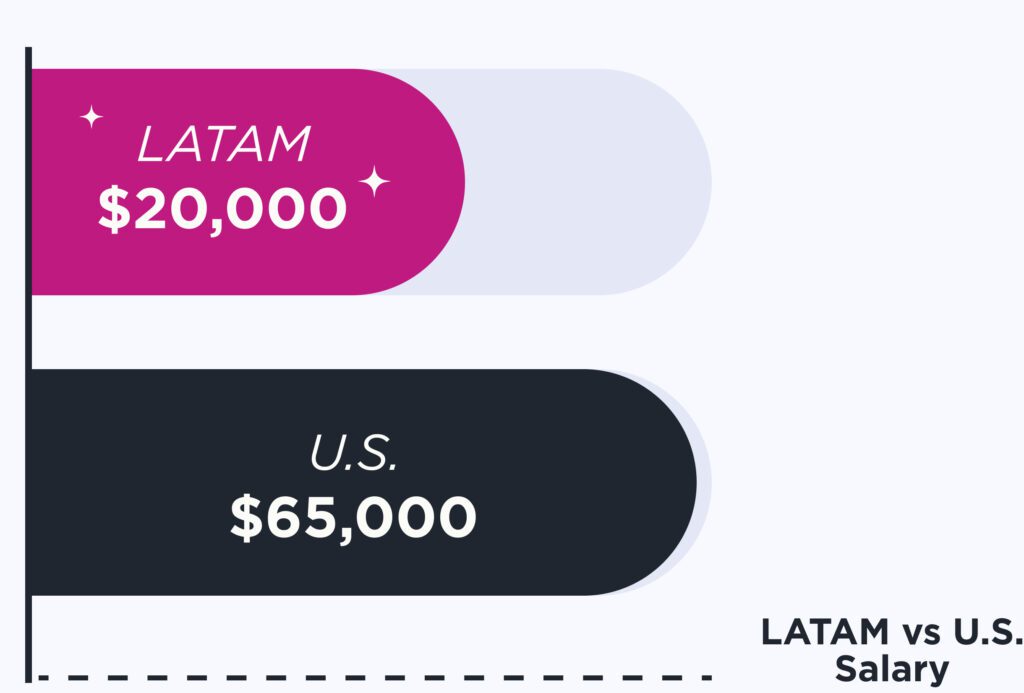
Reduce salary
expenses by *
69%
Why Hire Front-End Developers From Latin America?
Real-Time Interface Synchronization
Nearshore Front-End Developers collaborate on Figma during U.S. hours to ensure immediate UI component implementation.
Bilingual Technical Accuracy
LATAM Front-End Developers possess high English proficiency to ensure professional documentation and clear communication with stakeholders.
Technical Stack Expertise
Every Front-End Developer arrives skilled in React and Tailwind for seamless integration into modern engineering workflows.
Rapid Engineering Scalability
Deploy additional Front-End Developers within days to handle sudden increases in sprint requirements or product launches.
Cost-to-Output Efficiency
Hire Front-End talent at competitive rates while optimizing the technical development and project budget.
Top 1% Front-End Developers in Latin America
Quickly assemble the experts you need, for whatever you need, exactly when you need them.
What is a Remote Front-End Developer?
A Front-End Developer specializes in creating and optimizing user interfaces using technologies like HTML, CSS, and JavaScript. They bring designs to life, ensuring that applications are intuitive and perform well across devices. Whether working with a design team to translate wireframes into code or collaborating with backend developers to fetch and display data efficiently, they play a crucial role in how users experience a digital product.
- User Interface Development: Building functional and visually appealing web interfaces with React, Vue.js, or Angular. Ensuring seamless interaction, smooth animations, and consistency across devices.
- Performance Optimization: Enhancing speed by optimizing assets, minifying code, reducing HTTP requests, and implementing lazy loading to improve performance and reduce bounce rates.
- Cross-Browser and Device Compatibility: Writing adaptable code to ensure a consistent user experience across desktops, tablets, and mobile devices.
- Integration with Backend Systems: Connecting front-end interfaces with APIs, handling data fetching, and enabling real-time interactions using RESTful APIs, GraphQL, and WebSockets.
- Accessibility and SEO Best Practices: Implementing ARIA roles, maintaining proper color contrast, and structuring content for screen readers. Using semantic HTML, structured data, and performance enhancements to improve search engine rankings.
- Version Control and Collaboration: Managing code changes, tracking issues, and collaborating efficiently using Git, GitHub, or GitLab.
Front-End Developers Rates
Entry Level Front-End Developer
$25
Per Hour
Best for
Building simple landing pages and components.
1–2 years in Web Interface Development
See all features
- Converting design mockups into responsive HTML
- * Fixing routine styling and layout bugs
- Ensuring cross-browser compatibility for web pages
- Maintaining organized version control via Git
Top Requested
Mid-Level Front-End Developer
$35
Per Hour
Best for
Developing complex interactive web applications daily.
3–5 years in Professional UI Engineering
See all features
- Developing complex reusable React component libraries
- Integrating RESTful APIs into client applications
- Optimizing application performance and loading speeds
- Implementing advanced state management logic systems
Senior Front-End Developer
$45
Per Hour
Best for
Architecting scalable systems and leading teams.
5+ years in Strategic Frontend Architecture
See all features
- Designing high-level frontend architectural system frameworks
- Leading technical code reviews and standards
- Auditing global web accessibility and compliance
- Managing complex migration and modernization projects
No Upfront Recruitment Placement Consultation Fees!
Frequently Asked Questions
What specific tech stacks do Front-End Developers from Latin America specialize in?
The talent pool in Latin America is highly proficient in modern JavaScript frameworks and libraries. Most candidates specialize in React.js, Vue.js, or Angular, complemented by strong expertise in TypeScript, HTML5, and CSS3 (including Tailwind CSS or SASS). This technical foundation ensures that user interfaces are scalable, maintainable, and aligned with industry standards.

How is code quality and cross-browser compatibility guaranteed?
Professional Front-End Developers follow a strict development workflow that includes Version Control (Git), unit testing with frameworks like Jest or Cypress, and rigorous cross-browser testing. This ensures that the application performs consistently across Chrome, Safari, Firefox, and Edge, as well as on various mobile devices through Responsive Web Design (RWD) practices.
Why is hiring Front-End talent from Latin America strategic for North American companies?
The primary advantage is the real-time collaboration made possible by overlapping time zones (EST/CST/MST/PST). This allows for synchronous participation in Daily Stand-ups, Sprint Planning, and Pair Programming. Additionally, the high level of English proficiency in the region facilitates seamless communication regarding complex technical requirements and documentation.
Do these developers have experience with performance optimization and Core Web Vitals?
Yes. Modern front-end development focuses heavily on user experience and SEO. Developers implement techniques such as lazy loading, code splitting, and image optimization to ensure fast load times. By prioritizing Core Web Vitals (LCP, FID, CLS), they help improve search engine rankings and reduce bounce rates for web applications.
Can a Front-End Developer integrate with existing backend APIs and UI/UX design tools?
Integration is a core competency. These developers are skilled at consuming RESTful APIs and GraphQL, ensuring seamless data flow between the server and the UI. Furthermore, they are accustomed to working directly with design hand-off tools like Figma, Adobe XD, or Sketch, translating high-fidelity prototypes into functional, pixel-perfect code.
How long does the sourcing and technical vetting process take?
The recruitment lifecycle for specialized Front-End roles is optimized for efficiency. Once the specific technical requirements and seniority levels (Junior, Mid-level, or Senior) are defined, the process typically yields pre-vetted, high-quality candidates for interviews within 3 to 5 business days.