As an architect, your time is one of your most valuable resources. Balancing creative design work with administrative tasks can be overwhelming and often takes you away from what you do best—designing innovative spaces. That’s where a virtual assistant (VA) comes in, offering support to streamline your workflow and handle non-core responsibilities.
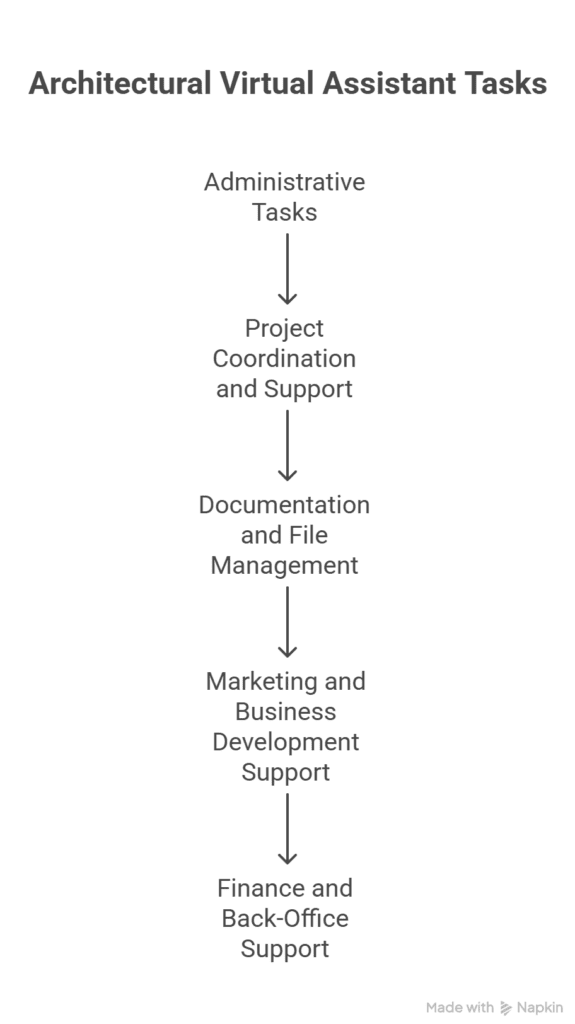
The tasks you can delegate to an architectural virtual assistant are:
- Administrative Tasks to Delegate
- Project Coordination and Support
- Documentation and File Management
- Marketing and Business Development Support
- Finance and Back-Office Support
By delegating specific tasks to a VA, you can focus on high-value activities like client consultations and project development while ensuring routine operations run smoothly. From managing emails and scheduling meetings to conducting research or preparing presentations, there are countless ways a virtual assistant can enhance your productivity.
Understanding which tasks to delegate is key to maximizing efficiency without compromising quality.
Key Takeaways
Delegating tasks to a virtual assistant (VA) allows architects to focus on high-value activities like design and client relationships while improving overall efficiency.
VAs can handle administrative duties such as email management, meeting scheduling, travel arrangements, and proposal preparation, reducing the workload for senior staff.
Project coordination tasks like creating timelines, managing RFIs, tracking submittals, and preparing progress reports can be streamlined by a VA to keep teams focused on billable work.
Virtual assistants support documentation and file management by organizing drawing sets, maintaining version control, and formatting construction documents for submission.
Marketing and business development tasks such as CRM data entry, social media scheduling, and portfolio formatting can be delegated to maintain consistent branding without diverting attention from core responsibilities.
Finance-related tasks like invoicing, expense reporting, and payroll prep are efficiently managed by VAs to ensure smooth back-office operations while saving time for architects.
Administrative Tasks to Delegate
Delegating administrative tasks to a virtual assistant (VA) helps you focus on design and client engagement. Offloading these responsibilities improves efficiency without compromising quality.
Calendar Management and Meeting Scheduling
A VA can manage your calendar by scheduling meetings, setting reminders, and organizing appointments. They ensure no overlaps or missed commitments by coordinating with clients, contractors, and team members. For example, they can block time for project reviews or arrange recurring check-ins with stakeholders.
Email Filtering and Client Communication Follow-Ups
VAs handle email filtering by categorizing messages into priority levels, flagging urgent ones, and discarding spam. They draft responses for routine inquiries and follow up with clients after meetings to confirm details or provide updates. This reduces inbox clutter while maintaining professional communication standards.
Proposal Preparation and Document Formatting
Your VA can assist in creating proposals by compiling data, formatting documents according to branding guidelines, and proofreading content for accuracy. For instance, they might prepare fee structures or add visual elements like charts to enhance presentation clarity.
Travel Arrangements and Vendor Coordination
VAs streamline travel planning by booking flights, arranging accommodations near project sites, and managing itineraries. They also coordinate vendor communications, such as obtaining quotes from suppliers or scheduling deliveries for materials needed at construction phases.
Project Coordination and Support Tasks
Delegating project coordination tasks to a virtual assistant can help you maintain focus on design and client relationships. VAs streamline workflows by handling time-intensive responsibilities that support your team’s efficiency.
Creating and Updating Project Timelines
VAs create detailed project timelines using tools like Microsoft Project, Trello, or Asana. They track milestones, deadlines, and deliverables to ensure alignment with your firm’s objectives.
By regularly updating these schedules based on progress reports or changes in scope, they provide clarity for all stakeholders. For example, if material delays occur, the VA adjusts the timeline accordingly and informs relevant parties.
Managing Submittals, RFIs, and Meeting Notes
A VA organizes submittals by tracking approvals and ensuring documentation is complete before submission deadlines. They manage Requests for Information (RFIs), logging them systematically while following up with contractors or consultants for responses.
During meetings, they take concise notes highlighting key decisions, action items, and follow-ups. These summaries keep your team informed without requiring additional effort from senior staff.
Preparing Progress Reports for Internal and Client Review
VAs compile data from site visits, contractor updates, or software dashboards into clear progress reports. These documents include visual aids like charts or graphs to illustrate budget usage or construction status effectively. Whether it’s an internal review meeting or a client presentation, these polished reports save time while maintaining professionalism.
Documentation and File Management
Delegating documentation and file management tasks to a virtual assistant ensures your architecture firm maintains organized, accessible records. This support reduces time spent on administrative work, allowing you to focus on design and client relationships.
Organizing Drawing Sets and File Revisions
A VA organizes drawing sets by categorizing files based on project phases or disciplines, such as structural, mechanical, or electrical drawings. They label files consistently using naming conventions like “ProjectName_Discipline_Date” for quick identification.
For revisions, they create folders for each version, ensuring older drafts remain accessible without cluttering active directories. This system prevents misplacement of critical documents during tight deadlines.
Managing Version Control Across Design Phases
Your VA tracks version control by maintaining logs that document changes across design iterations. Using tools like AutoCAD’s Sheet Set Manager or BIM 360, they update file versions with timestamps and notes summarizing edits.
They notify team members about updates through shared platforms like Google Drive or Dropbox. By centralizing this process, errors from outdated plans are minimized.
Formatting Construction Document Sets for Submission
VAs format construction document sets according to submission requirements specified by local authorities or clients. They ensure title blocks include accurate details like project name, date, scale, and sheet numbers.
Before submission, they cross-check all sheets for consistency in line weights, fonts, and annotations while exporting files into required formats such as PDF or DWG. Their attention to formatting standards streamlines approvals and enhances professionalism in submissions.
Marketing and Business Development Support
Delegating marketing and business development tasks to a virtual assistant helps architecture firms maintain client engagement while focusing on design work. VAs streamline processes, ensuring consistent communication and professional branding.
CRM Data Entry and Lead Tracking
VAs manage your customer relationship management (CRM) system by entering new leads, updating contact details, and tracking interactions. They organize data for easy access, enabling you to identify high-priority prospects quickly.
By maintaining accurate records of inquiries, follow-ups, and project statuses, they help you nurture relationships with potential clients effectively.
Social Media Scheduling and Content Coordination
VAs schedule posts across platforms like LinkedIn or Instagram using tools such as Hootsuite or Buffer. They coordinate content calendars to ensure timely publication aligned with campaigns or events. Additionally, they assist in sourcing relevant images or drafting captions that reflect your firm’s voice. This ensures a consistent online presence without diverting your focus from core responsibilities.
Formatting Case Studies and Portfolio Materials
VAs format case studies by compiling project details, client testimonials, and visual assets into cohesive documents. They refine layouts for presentations or digital portfolios using software like Adobe InDesign or Canva. With their support, you can showcase completed projects professionally during pitches or marketing efforts without dedicating hours to formatting tasks yourself.
Finance and Back-Office Support
Delegating finance and back-office tasks to a virtual assistant allows you to focus on design work while ensuring operational efficiency. These tasks, though essential, often consume time better spent on client projects.
Invoicing and Payment Follow-Ups
VAs manage invoicing by preparing accurate bills based on project milestones or hourly rates. They track unpaid invoices using tools like QuickBooks or FreshBooks, sending follow-up reminders to clients for overdue payments.
This ensures consistent cash flow without requiring your direct involvement.
Timesheet Collection and Preliminary Payroll Prep
VAs collect timesheets from team members, verifying hours worked against project schedules. They input this data into payroll systems like Gusto or ADP, preparing preliminary reports for review. By handling these steps, they reduce errors in employee compensation while saving you administrative time.
Organizing Expense Reports and Project Budgets
VAs compile expense receipts submitted by staff, categorizing them under appropriate budget headings. They create detailed expense reports using Excel or Google Sheets for easy tracking of costs per project phase. Additionally, VAs monitor budgets by comparing actual expenses with projections, flagging discrepancies early to prevent overruns.
Tools and Platforms Architectural VAs Should Be Familiar With
Virtual assistants supporting architecture firms must understand specific tools to perform tasks efficiently. These platforms enhance collaboration, streamline workflows, and ensure accurate project execution.
Project Management Tools (Asana, Monday, Trello)
Project management tools help track deadlines, assign tasks, and monitor progress. Asana allows you to create detailed task lists with due dates and dependencies for seamless coordination.
Monday offers visual dashboards that display project timelines and resource allocation in real time. Trello uses boards and cards to organize tasks by phases or priorities, making it easy to manage multiple projects simultaneously. These tools ensure your VA can keep teams aligned on deliverables without constant oversight.
File Management Systems (Dropbox, Google Drive, BIM 360)
File management systems provide secure storage and quick access to critical documents. Dropbox enables your VA to share large design files while maintaining version control across collaborators. Google Drive supports live editing of shared documents like proposals or reports, ensuring updates are instantly visible.
BIM 360 is essential for managing construction drawings and models in a centralized platform tailored for architectural workflows. Using these systems reduces file retrieval times and prevents miscommunication caused by outdated versions.
Communication Platforms (Slack, Zoom, Microsoft Teams)
Communication platforms facilitate real-time interaction between team members and clients. Slack organizes conversations into channels based on topics or projects, keeping discussions focused and searchable. Zoom provides reliable video conferencing for client presentations or team meetings when face-to-face interactions aren’t possible.
Microsoft Teams integrates chat functions with document sharing and scheduling features, creating an all-in-one communication hub for your firm’s needs. Leveraging these platforms ensures your VA can maintain clear communication lines across stakeholders effectively.
Why Architectural Firms Benefit from Virtual Assistant Support
Virtual assistants help architecture firms streamline operations by handling non-core tasks, allowing you to focus on design and client relationships. Delegating responsibilities improves efficiency and ensures your team prioritizes high-value work.
Reducing Admin Load on Principals and Senior Staff
Principals and senior staff often juggle leadership duties with administrative tasks, which can dilute their impact. VAs take over routine activities like email filtering, meeting scheduling, and travel arrangements. For example, a VA can manage your inbox by categorizing messages, flagging urgent ones, and drafting responses for approval. They also coordinate calendars across teams to prevent conflicts or missed opportunities.
By delegating these tasks, you gain more time for strategic decisions such as business development or project oversight. This targeted support reduces burnout among senior staff while maintaining operational continuity.
Keeping Project Teams Focused on Billable Design Work
Project teams generate revenue through billable hours spent on design work. Administrative distractions like preparing reports or tracking deadlines reduce productivity. VAs handle these functions efficiently using tools like Asana or Trello to update timelines, monitor milestones, and send reminders about deliverables.
They also compile progress reports with visual aids that communicate updates clearly during client reviews. By offloading these responsibilities to a VA, your team stays focused on creative output without compromising project management standards.
Design Time Is Fixed—Your Support Infrastructure Isn’t
In architecture firms, time lost to administrative bottlenecks directly impacts billable hours, project coordination, and design velocity. Managing RFIs, meeting notes, inbox triage, and vendor communication internally often leads to creative dilution and operational inefficiency.
Integrating virtual assistants into your studio’s workflow enables architecture principals and project leads to reallocate focus toward schematic development, client presentations, and coordination with consultants. This form of offloading is particularly effective for firms handling multiple concurrent projects or navigating complex permitting environments.
For firms seeking cost-effective scalability without compromising output quality, Wow Remote Teams is a specialized remote staffing agency for architecture practices that connects them with trained virtual professionals across Latin America. From document control and timesheet tracking to CRM upkeep and bid coordination, these supporting roles reduce internal drag and increase delivery consistency.
Studio efficiency isn’t just about better tools—it’s about better resource allocation.
Recommended Resources for Architecture Firms
Benefits of Partnering with a Remote Architectural Staffing Agency
How to Hire Remote Talent for Your Architecture Firm
6 Rapid Recruitment Strategies for High-Demand Architectural Projects
Top 10 Architectural Staffing Agencies
Cost Control Strategies for Architectural Firms
Top Remote Roles Architecture Firms Can Hire in Latin America
What Is an Architectural Virtual Assistant?
Long-Term Talent Retention Strategies for Architectural Firms
Frequently Asked Questions
What is a virtual assistant (VA) for architects?
A virtual assistant (VA) for architects is a remote professional who helps manage administrative, documentation, marketing, and financial tasks. This allows architects to focus on core responsibilities like design work and client relationships while improving overall productivity.
How can a VA help with time management for architects?
A VA can handle non-core tasks such as email filtering, scheduling meetings, managing project timelines, and preparing reports. By delegating these responsibilities, architects save time and can concentrate on high-value activities like creative design and client consultations.
What specific tasks can an architect delegate to a VA?
Architects can delegate tasks like calendar management, email organization, proposal preparation, travel arrangements, file management, social media coordination, invoicing, expense tracking, and CRM updates. These reduce workload while maintaining operational efficiency.
Can VAs assist with project coordination in architecture firms?
Yes! VAs create detailed project timelines using tools like Trello or Asana, track milestones and deadlines, manage RFIs/submittals, take meeting notes, and prepare progress reports to keep teams aligned with objectives.
How do VAs improve documentation processes for architects?
VAs organize drawing sets by phase or discipline using consistent naming conventions. They maintain version control logs across design phases and format construction documents according to submission requirements for streamlined approvals.
Are VAs helpful in marketing architectural services?
Absolutely! VAs manage CRM systems to nurture leads and track interactions. They also schedule social media posts, coordinate content creation efforts, format case studies/portfolios professionally for pitches or presentations.
What tools should an architectural VA be familiar with?
Architectural VAs should know project management tools like Asana or Monday.com; file storage platforms such as Dropbox or BIM 360; communication apps like Slack or Zoom; and financial software if handling invoicing/budgeting tasks.
How does hiring a VA benefit senior staff at architecture firms?
By delegating routine administrative duties like email filtering or meeting scheduling to a VA, senior staff can focus more on strategic decisions and leadership roles without feeling overwhelmed by day-to-day operations.
Can VAs help streamline finance-related tasks for architects?
Yes! VAs assist with invoicing based on milestones/hours worked, send payment reminders to clients for overdue bills, compile timesheets/payroll data accurately, monitor budgets closely to flag discrepancies early.
Why should architecture firms consider hiring a VA?
Hiring a VA reduces administrative burdens on the team while enhancing workflow efficiency. It enables architects to prioritize creative work over repetitive tasks, boosting productivity without compromising quality standards.