
Managing administrative tasks in healthcare can be overwhelming, especially when patient care demands your full attention. From scheduling appointments to handling medical records and billing, these responsibilities often consume valuable time that could be better spent on improving patient outcomes.
A virtual medical assistant is a technology-driven professional trained to streamline these processes. It supports you by automating repetitive tasks, enhancing efficiency, and reducing errors. Whether you’re a physician or part of a healthcare team, this type of support helps lighten the workload while maintaining accuracy and compliance.
By integrating a virtual medical assistant into your practice, you can focus more on delivering quality care without being bogged down by administrative burdens. It’s all about creating a seamless experience for both you and your patients.
What is a Virtual Medical Assistant?
A Virtual Medical Assistant (VMA) is a remote professional who supports healthcare providers with administrative and patient-facing tasks using digital tools. VMAs typically handle responsibilities such as appointment scheduling, medical billing, insurance verification, patient follow-ups, data entry, and inbox or EHR management—all without being physically present in the clinic.
Why Medical Practices are Hiring Medical Virtual Assistants?
Medical practices hire virtual medical assistants to address operational inefficiencies and enhance patient care. Administrative burdens, such as appointment scheduling, billing, and data entry, consume valuable time that could be spent on direct patient interaction.
By delegating these tasks to healthcare virtual assistants, you can focus on delivering quality healthcare.
Virtual medical assistants reduce costs by eliminating the need for additional in-office staff. For example, instead of hiring in-house receptionists or billing specialists, a team of virtual assistants can manage these responsibilities remotely. This approach is particularly beneficial for small practices with limited budgets.
Patient satisfaction improves when communication becomes seamless. Virtual healthcare assistants handle routine inquiries through chatbots or voice systems, ensuring patients receive timely responses without overwhelming your team. They also streamline follow-ups and reminders, reducing missed appointments and enhancing overall service delivery.
Error reduction is another key advantage. Manual processes often lead to mistakes in billing codes or patient records. Virtual assistants leverage AI-driven tools to minimize errors and maintain compliance with healthcare regulations.
Hiring virtual medical assistants allows you to optimize operations while prioritizing patient outcomes, critical factors for the success of medical practices.
Tasks and Responsibilities of a Virtual Medical Assistant
Virtual medical assistants handle diverse tasks to streamline healthcare operations. Their responsibilities span administrative, clinical, and communication functions, ensuring efficiency in medical practices.
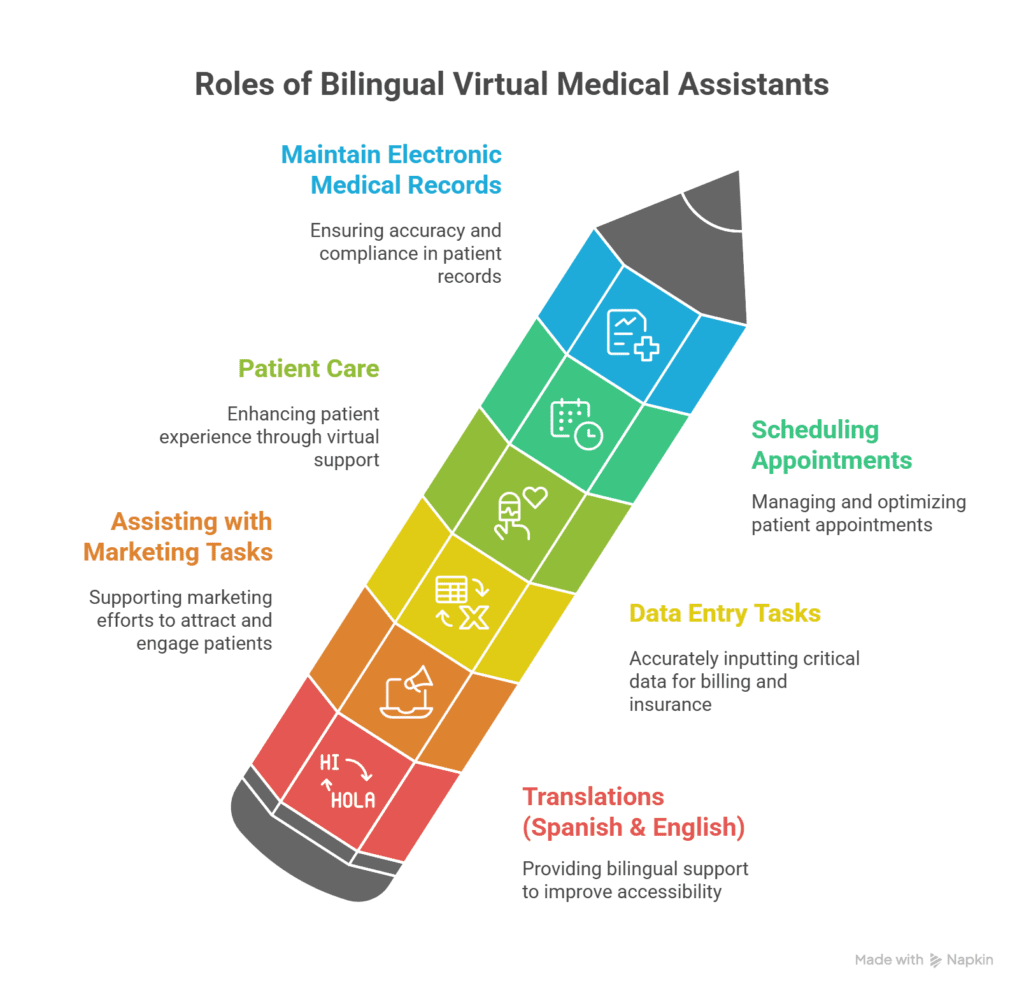
Maintain Electronic Medical Records
You ensure patient records are accurate and up-to-date by managing electronic health records (EHRs). This includes updating demographics, documenting medical histories, and uploading lab results. By maintaining organized records, you reduce errors and support compliance with HIPAA regulations.
Scheduling Appointments
You coordinate patient appointments by managing calendars and scheduling systems. This involves confirming availability, sending reminders via email or text, and rescheduling when necessary. Efficient appointment management minimizes no-shows and optimizes provider schedules.
Patient Care
You enhance patient experiences by addressing inquiries through chatbots or virtual interfaces. Answering questions about medications, follow-ups, or general care instructions fosters trust between patients and providers while reducing response times.
Data Entry Tasks
You input billing codes, insurance details, and other critical data into practice management software. Accurate data entry prevents claim denials from insurers like Medicare or private payers while improving revenue cycle efficiency.
Assisting with Marketing Tasks
You contribute to marketing efforts by managing social media accounts, creating newsletters for patient outreach, or updating website content. These activities improve engagement rates and attract new patients to the practice.
Translations (Spanish & English)
You provide bilingual support by translating documents such as consent forms or discharge instructions between Spanish and English. Offering multilingual services improves accessibility for non-English-speaking patients while enhancing their satisfaction levels.
Benefits of Hiring a Virtual Medical Assistant from Latin America
Hiring virtual medical assistants (VMAs) from Latin America offers healthcare practices unique advantages. These professionals provide cost-effective, high-quality support while aligning with your operational needs.
Reduce Administrative Burden
Latin American VMAs handle time-consuming tasks like appointment scheduling, billing, and EHR management. By delegating these responsibilities, you can focus on patient care instead of administrative overload. Their efficiency reduces errors in documentation and streamlines workflows.
Same Timezone
Many Latin American countries share similar time zones with the US. This alignment ensures real-time communication during business hours without delays or miscommunication. It simplifies collaboration for urgent tasks or last-minute schedule changes.
Fast ROI
Latin American VMAs deliver significant cost savings compared to hiring in-office staff. Lower labor costs combined with increased productivity lead to quicker returns on investment. Practices experience reduced overhead expenses without compromising service quality.
Low Turnover Rate
Professionals from this region often exhibit strong job commitment and loyalty. A lower turnover rate means less disruption to operations and fewer resources spent on training replacements. Stability enhances long-term efficiency within your practice.
Great Cultural Fit
Cultural similarities between Latin America and the US foster better understanding and rapport between teams. Shared values around professionalism and customer service create smoother interactions with patients and colleagues alike.
Great English Level
Many Latin American VMAs possess advanced English proficiency due to bilingual education systems and cultural exposure to English-speaking media. Clear communication minimizes misunderstandings when interacting with patients or managing sensitive data like medical records.
Factors to Look for when Hiring a Virtual Medical Assistant
Choosing the right virtual medical assistant impacts your practice’s efficiency and patient satisfaction. Focus on specific skills and qualities that align with healthcare operations.
Admin Experience
Prioritize candidates with proven experience in healthcare administration. Look for familiarity with electronic health records (EHRs), appointment scheduling systems, insurance verification processes, and billing software like Kareo or Athenahealth. Verify their ability to handle repetitive tasks accurately, such as data entry or claims processing, which reduces errors and ensures compliance with HIPAA regulations.
Communication Skills
Effective communication is essential for managing patient interactions and team coordination. Assess proficiency in English, both written and spoken, especially if they’ll interact directly with patients through emails, calls, or chat platforms. Evaluate responsiveness during interviews to gauge how well they can address inquiries or resolve issues promptly while maintaining professionalism.
Project Management
Strong organizational skills ensure seamless task execution across multiple responsibilities. Check for experience using project management tools like Trello or Asana to track deadlines and workflows efficiently. Ask about their approach to prioritizing urgent tasks—such as rescheduling appointments due to cancellations—to avoid disruptions in daily operations.
Continuous Learning
Healthcare evolves rapidly; adaptability matters. Select assistants who demonstrate a commitment to learning new technologies, regulatory updates, or industry trends relevant to medical practices. Certifications in medical coding (e.g., CPC) or training in AI-driven tools like voice recognition software indicate readiness to enhance their skill set over time.
Recommended Resources for Healthcare Hiring & Remote Staffing
- Nearshoring for Medical Practices
- Strategies to Reduce Turnover in Healthcare Practices
- Virtual Medical Assistant Tasks
- On-Site vs Virtual Medical Staff
- How to Hire Non-Clinical Remote Talent from Latin America
- Best Countries to Hire Healthcare Support Roles in Latin America
- 7 Common Tasks Healthcare Providers Outsource to LATAM
- Top Remote Roles Healthcare Providers Can Hire in Latin America
- Benefits of Partnering with a Remote Healthcare Staffing Agency
- Medical Practice Recruitment Strategies
How Wow Remote Teams will Help You Hire Top Virtual Medical Assistants from LATAM
Partnering with Wow Remote Teams ensures you gain access to highly skilled virtual medical assistants from Latin America who are equipped to meet your practice’s unique needs. With their expertise in healthcare administration and advanced English proficiency, these professionals seamlessly integrate into your operations while enhancing patient care.
Wow Remote Teams simplifies the hiring process by connecting you with top-tier candidates who bring both efficiency and cultural alignment to your practice. Our cost-effective solutions help reduce overhead expenses without compromising quality, allowing you to focus on delivering exceptional care.
By choosing Wow Remote Teams, you’re investing in a reliable partner that prioritizes operational excellence and patient satisfaction. Let them handle the complexities of recruitment so you can concentrate on what matters most—providing outstanding healthcare services.