
Local hiring can feel like working with blinders on, limited options, higher costs, and a constant struggle to fill roles with the right skills. For small businesses, that limitation can slow growth more than any competitor. Remote talent changes that equation. It opens the door to qualified professionals worldwide, often with the exact expertise your market demands, but your local pool can’t supply.
Hiring remote professionals is all about gaining operational flexibility, accessing specialized knowledge on demand, and building teams that can adapt quickly as priorities shift. From customer support and marketing to finance and project management, remote professionals can strengthen the parts of your business that need the most attention, without adding unnecessary overhead.
In this guide, I’ll show you where remote talent delivers the greatest impact, how to integrate it into your operations, and what to watch for when building a global team that drives growth.
Key Takeaways
- Access to Global Skills: Remote talent gives small businesses access to specialized skills worldwide, bypassing local hiring limitations and driving growth.
- Cost Reduction: Hiring remote professionals reduces expenses like office space and equipment, while offering competitive rates from regions with lower living costs.
- Scalable Operations: Flexible engagement models enable efficient scaling to meet seasonal or project-based demands without long-term commitments.
- Innovation Through Diversity: Diverse perspectives from remote teams enhance problem-solving, creativity, and strategic decision-making.
- Operational Resilience: Distributed teams minimize risks from regional disruptions and maintain business continuity during unexpected challenges.
- Seamless Collaboration: Cloud-based tools ensure smooth communication and productivity across time zones, integrating remote workers into workflows effectively.
Why Remote Talent is a Strategic Growth Lever for Small Businesses
Remote talent expands your access to specialized skills beyond local limitations. Instead of relying on a restricted pool, you can source experts in software development, digital marketing, or customer support from global markets. This broader reach ensures you’re hiring the best fit for specific roles without geographic constraints.
Cost efficiency becomes achievable with remote workers. You reduce expenses like office space, utilities, and equipment while accessing competitive rates in regions with lower living costs. For example, hiring developers from Central America or virtual assistants from South America often provides high-quality work at reduced costs compared to local hires.
Scalability improves when you integrate remote professionals into your operations. Seasonal demands or project-based needs become manageable since you can quickly onboard freelancers or contract workers without long-term commitments. This flexibility helps maintain productivity during peak periods without overextending resources.
Diverse perspectives enhance innovation within your business. Collaborating with individuals from different cultural and professional backgrounds fosters creative problem-solving and unique approaches to challenges. Remote teams bring varied insights that help refine strategies and improve decision-making processes.
Operational resilience strengthens through distributed teams. By decentralizing your workforce, disruptions like natural disasters or regional crises have less impact on overall performance. A globally dispersed team ensures continuity even if one location faces unexpected issues.
Technology adoption accelerates as remote setups require robust tools for communication and collaboration. Platforms like Slack, Zoom, Asana, and Trello streamline workflows and keep teams aligned regardless of physical distance. These tools also boost transparency and accountability across projects.
Employee satisfaction increases due to flexible working conditions offered by remote roles. Professionals value autonomy over their schedules and environments, leading to higher morale and retention rates within your team. Happier employees contribute directly to better results for your business goals.
Expanding Capabilities without Expanding Overhead
Remote talent lets you scale your business operations while keeping costs in check. Hiring globally eliminates the need for additional office space, utilities, and equipment. For example, a remote graphic designer uses their own tools, reducing your capital expenditure.
Outsourcing specialized tasks to remote professionals increases efficiency without inflating payroll. A freelance copywriter or remote SEO expert can handle project-based needs, allowing you to allocate resources strategically. This flexibility ensures you’re paying only for completed work rather than full-time salaries with benefits.
Accessing global talent pools provides competitive pricing options. Professionals from regions with lower living costs often offer high-quality services at reduced rates compared to local hires. This cost advantage enables small businesses to compete effectively against larger companies with bigger budgets.
Cloud-based collaboration tools streamline communication and productivity within distributed teams. Platforms like Slack, Trello, and Zoom help seamless interaction between team members across time zones, ensuring projects stay on track without requiring physical presence.
By leveraging remote workers, you gain access to diverse skill sets and perspectives that drive innovation. Whether it’s hiring an app developer from India or a marketing strategist from Germany, these unique viewpoints strengthen your problem-solving capacity while maintaining financial discipline.
Filling Critical Skill Gaps Faster than Local Hiring
Remote talent connects you to professionals with specialized skills, eliminating delays caused by limited local availability. Small businesses often struggle to find experts in areas like data analysis, UX design, or SEO within their immediate region. By tapping into a global workforce, you can access these niche skills quickly and efficiently.
Hiring remotely accelerates the recruitment process by bypassing geographic constraints. Instead of waiting weeks or months for qualified candidates locally, platforms like Upwork or Toptal enable you to identify and onboard skilled freelancers or remote employees in days. This speed is crucial when your business faces urgent project deadlines or competitive pressures.
Global hiring expands your options for rare expertise. For example, if you’re launching an e-commerce platform and need advanced cybersecurity measures, finding a specialist remotely ensures that quality isn’t compromised due to location-based limitations. Remote professionals often bring experience from diverse industries and markets, enriching your projects with unique insights.
Flexible engagement models make filling temporary gaps easier. Whether it’s a short-term marketing campaign or seasonal customer support needs, remote workers allow you to scale up resources without committing to long-term contracts. This adaptability helps optimize budgets while maintaining operational efficiency during peak periods.
Technology streamlines collaboration with distributed teams. These solutions reduce onboarding friction and help integrate remote talent into your workflows effectively.
By leveraging remote talent strategically, small businesses can address skill shortages promptly while staying agile in dynamic market conditions.
Building Lean, Specialized Teams on Demand
Remote talent lets you assemble highly skilled teams quickly without long-term commitments. You can hire professionals for specific projects or tasks, such as graphic design, software development, or content creation, and scale your workforce up or down based on current needs. This flexibility ensures you’re not overstaffed during slower periods or understaffed when demand spikes.
By accessing global talent platforms like Upwork or Fiverr, you can identify experts with niche skills in hours instead of weeks. These platforms provide access to verified reviews and portfolios, helping you make informed hiring decisions. For example, if your business requires a cybersecurity consultant for a short-term audit, you can find one with relevant certifications and experience without committing to a full-time salary.
Engaging remote specialists reduces costs associated with traditional hiring processes. You avoid expenses like office space, equipment provisioning, and relocation packages since remote workers use their own resources. Also, many freelancers offer competitive rates due to lower living costs in their regions.
Cloud-based tools streamline collaboration across distributed teams. Platforms like Slack help real-time communication, while project management software like Trello keeps everyone aligned on deliverables and deadlines. These technologies ensure productivity remains high even when team members operate from different time zones.
Specialized remote teams also bring diverse perspectives that enhance problem-solving and innovation. A marketing campaign created by professionals from varied cultural backgrounds is more likely to resonate with a broader audience than one developed by a homogenous group. By leveraging this diversity strategically, your small business gains an edge in competitive markets.
Extending Service Hours and Improving Responsiveness
Remote talent enables your business to operate beyond traditional working hours. By hiring professionals across different time zones, you can provide customer support or services 24/7. For example, a remote team member in Mexico can handle inquiries while your local team is focused on more important tasks, ensuring uninterrupted assistance.
Faster response times enhance customer satisfaction. Remote workers specializing in client communication or technical support can address issues promptly, reducing delays caused by limited local availability. This agility strengthens trust and loyalty among your clients.
Distributed teams improve coverage during peak periods. If demand surges unexpectedly, remote employees can step in to manage the workload without overburdening your core staff. Tools like Zendesk or Freshdesk streamline ticket management across time zones, maintaining consistency in service quality.
Flexibility in scheduling increases efficiency. You can assign tasks based on time zone advantages, such as having content writers deliver drafts overnight or IT specialists perform system updates during off-peak hours. This approach optimizes productivity while minimizing disruptions to daily operations.
Supporting Rapid Pivots and New Market Opportunities
Remote talent enables you to adapt quickly during market shifts or unexpected challenges. By accessing a global pool of professionals, you can onboard specialists for emerging needs without the delays tied to traditional hiring processes. For example, if your business identifies a sudden demand for e-commerce integration, remote developers with expertise in platforms like Shopify or WooCommerce can be hired within days.
Expanding into new markets becomes more feasible when leveraging remote workers familiar with those regions. You gain access to local insights on consumer behavior, cultural preferences, and regulatory requirements by hiring professionals from target areas. This approach minimizes risks while accelerating entry timelines.
Project-based engagements with remote freelancers allow you to test ideas or products in different markets before committing significant resources.
Distributed teams also enhance operational flexibility during strategic pivots. If your business decides to shift focus—like transitioning from physical retail to online sales—remote talent ensures uninterrupted workflows while internal teams adjust priorities.
By integrating remote talent strategically, small businesses can seize growth opportunities faster and maintain agility in competitive environments.
Strengthening Competitive Edge Through Global Perspectives
Remote talent introduces diverse viewpoints that enrich your business strategies. By hiring professionals from different cultural and professional backgrounds, you gain insights into varied markets, consumer behaviors, and industry trends. For example, a marketing expert in Asia might provide unique approaches to social media campaigns compared to one in Europe.
Global perspectives improve innovation by challenging conventional thinking. When team members bring distinct problem-solving methods or creative ideas shaped by their experiences, your business benefits from fresh solutions. A software developer in South America may suggest cost-effective coding techniques unfamiliar to developers in North America.
Accessing remote talent helps you tailor services for international audiences. If you’re entering new markets, hiring remote workers familiar with local languages and customs ensures better communication and customer engagement. For instance, a customer support agent fluent in Spanish can enhance service quality for Latin American clients.
Distributed teams reduce risks tied to regional disruptions. With employees spread across time zones and locations, operations continue smoothly during natural disasters or political instability affecting specific areas. This decentralized structure strengthens resilience against unforeseen challenges.
Collaborating with global professionals also enhances adaptability during market shifts. Remote professionals specializing in emerging technologies like AI or blockchain enable quick pivots when industries evolve rapidly. Their expertise positions your small business ahead of competitors slower to adopt change.
By integrating these diverse skills and perspectives into your workforce, you create a dynamic environment where innovation thrives while maintaining agility in competitive landscapes.
Reducing Cash Flow Risks and Fixed Payroll Burdens
Full-time remote employees give small businesses the stability of dedicated staff without the heavy overhead that comes with local hires. By building your team in cost-effective talent markets, you can maintain consistent productivity while reducing expenses tied to high local salaries, office space, and in-office perks.
A committed remote team member integrates with your processes, understands your customers, and grows with your business, all while working at a cost structure that protects your margins. In many cases, businesses hiring in regions with lower living costs can save 40–60% compared to domestic salaries, without sacrificing skill or quality.
Full-time remote roles also provide predictable payroll planning. You’re not juggling fluctuating project fees or onboarding cycles; instead, you have reliable team members who can pivot across priorities, handle ongoing tasks, and take ownership of results year-round. This stability helps you meet growth goals without the financial volatility of constantly sourcing short-term help.
With modern HR and payroll platforms, cross-border hiring is no longer an administrative headache. Payments, compliance, and benefits can be managed in one system, giving you full transparency over labor costs while ensuring your team members are paid accurately and on time.
Keeping Focus on Core Business while Experts Handle the Rest
Delegating specialized tasks to remote professionals lets you concentrate on your primary goals. Remote talent takes over areas like IT support, graphic design, or bookkeeping, freeing up your time for strategic decision-making and growth initiatives.
Outsourcing non-core functions reduces distractions that slow progress. For example, instead of managing payroll internally, you can hire a remote accounting expert who ensures compliance and accuracy without requiring constant oversight.
Remote specialists bring expertise that enhances efficiency in key operations. A digital marketing specialist can manage ad campaigns and SEO strategies effectively, delivering measurable results while you prioritize customer relationships or product development.
By leveraging remote talent strategically, you maintain focus on scaling your business while skilled professionals handle essential but secondary responsibilities.
Practical Steps to Make Remote Talent Work
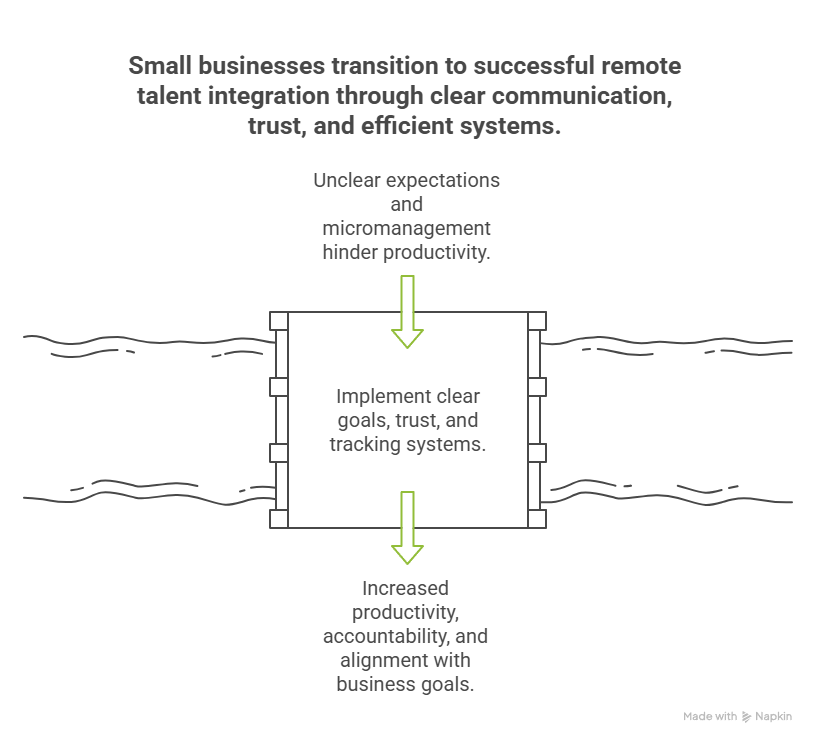
Remote talent can transform your small business, but success depends on how you integrate and manage these professionals. Focus on clear communication, trust-building, and efficient systems to maximize their potential.
Define outcomes clearly, not just tasks
Set measurable goals for every project or role. Instead of assigning vague tasks like “improve social media,” specify objectives such as “increase Instagram engagement by 20% in three months.” Use tools like OKRs (Objectives and Key Results) or SMART goals to ensure clarity. When outcomes are well-defined, remote workers understand expectations and align their efforts with your business priorities.
Prioritize trust and autonomy over micromanagement
Empower remote professionals by trusting them to deliver results without constant oversight. Provide detailed briefs upfront, then give them space to execute. For example, if you’re hiring a graphic designer for a campaign, share brand guidelines and deadlines but avoid dictating every design element. Trust fosters accountability while reducing the inefficiencies caused by micromanagement.
Use systems to maintain accountability and transparency
Carry out tools that track progress without disrupting workflows. Platforms like Trello or Asana help monitor task completion, while time-tracking apps like Toggl provide insights into productivity. Schedule regular check-ins via Zoom or Slack to discuss updates and address challenges collaboratively. These systems create visibility across distributed teams, ensuring everyone stays aligned without excessive follow-ups.
Building a Stronger, More Adaptable Business Through Remote Talent
Remote talent gives small businesses a practical way to fill skill gaps, reduce payroll pressure, and maintain flexibility without sacrificing quality. The right people in the right roles keep projects moving, improve efficiency, and allow you to respond quickly to market changes.
Wow Remote Teams connects small businesses with full-time, pre-vetted professionals from Latin America who work in your time zone, are bilingual, and ready to integrate into your operations. You get proven talent without inflated salaries or long hiring cycles.
Continuing to rely only on local hires limits your options and costs more than it should. Book a consultation with our remote staffing agency for small businesses and see how a single remote hire can strengthen your team and improve your bottom line.
Recommended Reads for Smarter Hiring Decisions
Frequently Asked Questions
What are the main benefits of hiring remote talent for small businesses?
Hiring remote talent allows small businesses to access a global pool of skilled professionals, reduce overhead costs, and improve flexibility. It also enhances scalability, fosters innovation through diverse perspectives, and enables quick filling of skill gaps in niche areas.
How does remote hiring help reduce costs?
Remote hiring minimizes expenses related to office space, equipment, and long-term payroll obligations. Businesses can also leverage competitive rates from regions with lower living costs while paying only for completed work or project-based engagements.
Which roles are best suited for remote talent?
Roles like software development, digital marketing, customer support, graphic design, bookkeeping, IT support, and data analysis are well-suited for remote talent due to their digital nature and specialized expertise requirements.
How can small businesses find reliable remote professionals?
Platforms like Upwork, Fiverr, and Toptal provide access to verified freelancers with reviews and portfolios. These platforms make it easy to identify experts based on specific skills and hire them quickly for short- or long-term projects.
What tools can help manage remote teams effectively?
Tools like Slack (communication), Zoom (video conferencing), Asana or Trello (project management), and time-tracking apps enhance collaboration and transparency among distributed teams while ensuring alignment with business goals.
Can hiring remote workers improve operational efficiency?
Yes! Remote workers enable businesses to scale operations flexibly by managing seasonal demands or project-based needs efficiently. They also bring diverse perspectives that foster innovation and problem-solving capabilities.
How does accessing global talent benefit small businesses strategically?
Global talent provides insights into international markets, consumer behaviors, and industry trends. It supports market expansion efforts by offering local expertise while enabling rapid pivots during dynamic conditions without delays tied to traditional hiring processes.
Is it possible to maintain productivity across different time zones with remote teams?
Absolutely! By leveraging time zone differences strategically, tasks can be assigned around the clock. This ensures 24/7 service availability while optimizing productivity during peak periods or urgent deadlines.
How do flexible engagement models work in remote hiring?
Flexible engagement models allow businesses to hire professionals on a project basis or temporarily fill skill gaps as needed. This reduces fixed payroll burdens while maintaining agility during fluctuating workloads or seasonal demands.
What steps should small businesses take when integrating remote talent?
Clear communication is key—define measurable outcomes instead of vague tasks. Use collaboration tools like Trello or Asana for tracking progress. Build trust by prioritizing autonomy over micromanagement while fostering accountability through transparent systems.