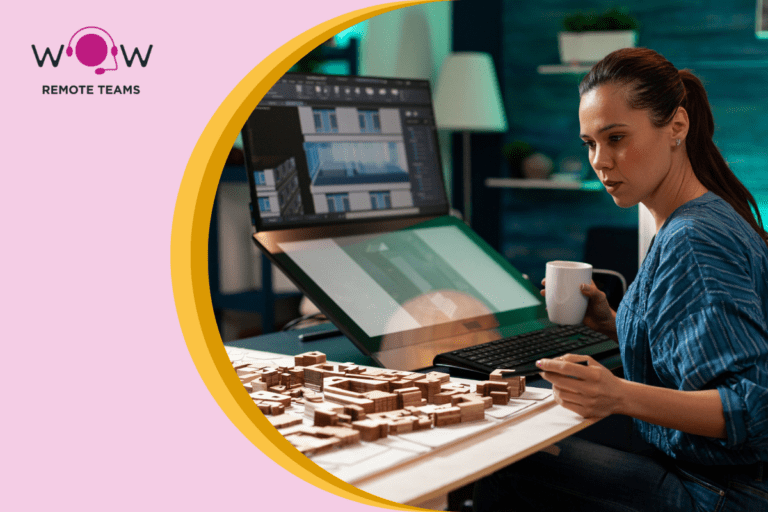
An Architectural 3D Artist (Render) is a visualization specialist who creates photorealistic renderings, animations, and immersive visual content that translate architectural concepts into compelling client-facing and stakeholder-ready imagery.
They use software such as 3ds Max, V-Ray, Corona Renderer, Lumion, and Unreal Engine to transform CAD and BIM models into high-fidelity visuals. Their expertise spans lighting, materials, textures, and post-production workflows in Photoshop or After Effects to communicate design intent with clarity. By bridging the gap between technical drawings and experiential vision, they enable faster approvals, investor buy-in, and marketing leverage.
What Kind of Companies Hire Architectural 3D Artist (Render)s?
- Architecture firms – to produce client presentations, competition entries, and design development visuals.
- Real estate developers – to create marketing assets that attract investors and buyers before construction begins.
- Construction companies – to support pre-construction visualization, sequencing, and client alignment.
- Interior design studios – to render material palettes, furniture layouts, and lighting schemes with accuracy.
- Property marketing agencies – to deliver CGI campaigns, virtual tours, and sales collateral for developments.
- Hospitality and retail groups – to visualize experiential spaces for brand alignment and design validation.
An Architectural 3D Artist (Render) is mission-critical because their outputs accelerate decision-making, enhance investor confidence, and turn abstract plans into tangible business assets.
Architectural 3D Artist (Render) Job Description Template
This Architectural 3D Artist (Render) Job Description Template outlines the core responsibilities, skills, and qualifications required to recruit a visualization specialist who converts CAD/BIM inputs into photorealistic imagery and animations. Adjust it to fit your project typologies, production pipeline, and marketing objectives.
Company Overview
At [Company Name], we deliver high-fidelity architectural visualizations for residential, commercial, and mixed-use developments. Our team supports go-to-market, entitlement, and client presentations through cinematic renders, real-time experiences, and sales-ready assets.
We operate a calibrated rendering pipeline—ingesting Revit/AutoCAD/Rhino models; applying physically based materials; and producing stills, flythroughs, and VR content with 3ds Max, V-Ray/Corona, Unreal Engine, and Lumion—backed by color-accurate post-production in Photoshop/After Effects.
We value accuracy, brand consistency, and measurable impact—visuals that shorten approval cycles, raise pre-sales conversion, and align stakeholders before construction.
Job Summary
Job Title: Architectural 3D Artist (Render)
Location: [Insert Location or “Remote”]
Job Type: [Full-Time/Part-Time/Contract]
We’re seeking an Architectural 3D Artist (Render) to transform CAD/BIM models into photorealistic images, animations, and interactive scenes. You’ll own lighting, materials, composition, and post, delivering assets for client approvals, marketing, and investment decks.
The ideal candidate combines technical rigor with visual storytelling—comfortable optimizing heavy scenes, matching photographic references, and delivering on schedule across multiple workstreams.
Key Responsibilities
- Import and clean geometry from Revit/AutoCAD/Rhino; retopologize and prepare assets for efficient rendering.
- Build scenes in 3ds Max (or Blender), apply PBR materials, and configure physically accurate lighting (HDRI, sun/sky, IES).
- Produce photorealistic stills and animations using V-Ray or Corona; create real-time walkthroughs in Unreal Engine or Twinmotion/Lumion.
- Develop coherent visual narratives: camera paths, composition, depth of field, and atmospheric effects to communicate design intent.
- Execute post-production in Photoshop/After Effects: color management, layer comps, matte painting, and sky/environment replacement.
- Collaborate with architects, interior designers, and marketing to align FF&E, materials, and brand standards; maintain version control.
- Optimize render settings, proxies, and textures to balance quality, noise, and render times; document repeatable presets/templates.
- Deliver on brief: create shot lists, estimate hours, hit milestones, and package source files with organized asset libraries.
Required Skills and Qualifications
- 3+ years producing architectural CGIs, animations, and/or real-time scenes for built environment projects.
- Advanced proficiency with 3ds Max (or Blender), V-Ray/Corona, and Photoshop; working knowledge of Unreal Engine or Lumion.
- Fluency in importing and coordinating BIM/CAD models (Revit, AutoCAD, Rhino); ability to resolve normals, UVs, and scale issues.
- Strong understanding of photographic principles: lighting, exposure, composition, lenses, and color management (sRGB/ACES).
- Proven scene optimization and asset management skills; experience with proxies, instancing, and texture atlases.
- Clear communication and collaboration with design/marketing teams; reliable time estimation and on-time delivery.
Preferred Qualifications
- Background in architecture/interior design or environmental design; familiarity with material specifications and FF&E.
- Experience creating interactive content (Unreal Engine, Twinmotion) and VR/AR previews for stakeholder reviews.
- Knowledge of animation pipelines (After Effects/Premiere), render farm workflows, and LUT-based color grading.
Use this Architectural 3D Artist (Render) template to hire a visualization professional who elevates approvals, strengthens pre-sales, and delivers consistent, on-brand assets across your development and marketing pipeline.
What Does an Architectural 3D Artist (Render) Do?
An Architectural 3D Artist (Render) creates photorealistic imagery, animations, and interactive visualizations that translate architectural and interior design concepts into market-ready presentations. Their output drives investor confidence, accelerates client approvals, and provides marketing teams with sales collateral long before construction begins. The role transforms technical CAD/BIM data into assets that directly influence revenue, project timelines, and stakeholder alignment.
Visualization Workflows
An Architectural 3D Artist builds end-to-end visualization pipelines, starting with CAD/BIM model imports and continuing through geometry cleanup, material assignment, lighting, and post-production. They create stills, flythroughs, and virtual walkthroughs tailored for presentations, permitting boards, or investor decks. Deliverables are calibrated for accuracy, scale, and aesthetic consistency with the design intent.
Tools and Technologies
Execution depends on advanced proficiency with 3ds Max, V-Ray, Corona Renderer, and Unreal Engine, supported by Rhino, Revit, or AutoCAD inputs. Artists also leverage Lumion and Twinmotion for real-time output, Adobe Photoshop for post-processing, and After Effects or Premiere for motion graphics. Technical competence in scene optimization, asset management, and render farm workflows ensures efficiency across multiple projects.
Performance Metrics
The effectiveness of an Architectural 3D Artist is evaluated by measurable outputs such as reduced approval cycles, higher pre-sales conversion rates, and fewer design-related clarifications during stakeholder meetings. Key indicators include image realism, turnaround times per render, accuracy of material representation, and the ability to meet marketing or investor deadlines without costly revisions.
Cross-Team Collaboration
Architectural 3D Artists interface with architects, interior designers, real estate developers, and marketing teams. They align visual assets with branding requirements, ensure material palettes reflect actual specifications, and incorporate feedback from consultants. This collaboration reduces miscommunication between design and sales functions, ensuring that visuals are both technically accurate and commercially compelling.
Return on Investment (ROI) Contribution
By producing visuals that secure approvals and accelerate pre-sales, an Architectural 3D Artist reduces holding costs and financing risk for developers. Their work improves marketing conversion rates and minimizes delays tied to unclear design communication. In measurable terms, they enhance time-to-market efficiency and safeguard margins across high-value developments.
Situational Relevance for Hiring Managers
- Launching pre-sales campaigns that require investor-ready marketing assets before construction
- Scaling design teams that need visualization capacity to manage multiple concurrent projects
- Entering new markets where stakeholder approvals hinge on photorealistic presentations
- Reducing risk of misalignment between architectural intent and client expectations
- Supporting high-volume real estate portfolios with consistent, brand-aligned visual collateral

Qualities to Look for When Hiring an Architectural 3D Artist (Render)
Hiring an Architectural 3D Artist (Render) should be approached as a business-critical decision. The evaluation goes beyond artistic talent—it requires identifying professionals who can deliver measurable outcomes such as shorter approval cycles, higher pre-sales conversion rates, and clearer stakeholder alignment.
1. Technical Mastery of Visualization Pipelines
An effective Architectural 3D Artist must handle end-to-end workflows—from CAD/BIM model imports to scene assembly, rendering, and post-production. Proficiency in 3ds Max, V-Ray, Corona, or Unreal Engine ensures projects are delivered with photorealistic precision. This technical discipline reduces revision cycles, accelerates delivery, and provides assets that marketing and sales teams can deploy immediately.
2. Photorealism and Material Accuracy
Surface-level visuals are insufficient for investors or buyers. The right candidate demonstrates expertise in physically based rendering (PBR), texture mapping, and accurate lighting calibration. Their ability to replicate stone, glass, wood, and metal finishes with precision ensures stakeholders trust that visual outputs align with final construction, eliminating costly misunderstandings during design or sales phases.
3. Efficiency in Scene Optimization
Architectural visualization often involves complex models with millions of polygons and heavy texture loads. Skilled 3D Artists apply optimization techniques such as proxy workflows, instancing, and render farm management. These efficiencies lower production costs, improve render turnaround, and ensure scalability when multiple projects are running in parallel.
4. Alignment with Design and Brand Standards
An Architectural 3D Artist must integrate architectural intent with marketing goals. They collaborate with architects to reflect accurate plans, while also delivering visuals that align with corporate brand identity. Consistency in color grading, composition, and presentation formats strengthens brand recognition and supports cohesive sales campaigns across multiple developments.
5. Strong Understanding of Spatial Storytelling
Beyond technical rendering, top candidates understand how to create narratives through camera paths, composition, and environmental context. Effective visual storytelling helps stakeholders envision the full experience of a space—driving buyer confidence, securing regulatory approvals, and reducing delays tied to unclear or underwhelming presentations.
6. Proficiency in Post-Production and Motion Workflows
Expertise in Photoshop, After Effects, or Premiere is essential for refining raw renders into polished deliverables. Whether adjusting exposure, compositing skies, or producing animation sequences, post-production ensures deliverables meet investor and marketing standards. Motion workflows also enable cinematic walkthroughs that increase engagement and accelerate pre-sales.
7. Collaborative Communication Skills
The role requires regular coordination with architects, interior designers, developers, and marketing teams. Clear communication around material palettes, FF&E specifications, and brand alignment reduces rework and ensures stakeholders receive deliverables that meet both technical and commercial requirements. Effective collaboration is a direct driver of cost savings and project velocity.
8. Measurable Contribution to ROI
A qualified Architectural 3D Artist contributes directly to key business KPIs—shorter approval timelines, increased pre-construction sales, and reduced financing risk. Their outputs enable faster investor decisions and provide marketing teams with tools that improve conversion rates. This measurable value positions the role as a strategic asset rather than a production cost.
FAQs
What is the role of an Architectural 3D Artist (Render) in a project?
An Architectural 3D Artist (Render) is responsible for converting CAD or BIM models into photorealistic images, animations, and interactive visualizations. Their work communicates design intent with accuracy, enabling stakeholders, investors, and clients to evaluate spatial qualities and materials before construction begins.
How does an Architectural 3D Artist (Render) improve ROI for developers?
An Architectural 3D Artist (Render) improves ROI by producing visuals that accelerate approvals, increase pre-sales conversions, and reduce financing risks. By delivering accurate and market-ready renderings, they shorten decision cycles and minimize costly design clarifications that can delay projects.
What tools and software should an Architectural 3D Artist (Render) use?
An Architectural 3D Artist (Render) typically uses 3ds Max, V-Ray, Corona Renderer, and Unreal Engine for rendering, along with Revit, AutoCAD, or Rhino for model inputs. Post-production tools such as Photoshop, After Effects, and Premiere are used to refine images and create animations that meet marketing and investor standards.
How do Architectural 3D Artists (Render) collaborate with design teams?
An Architectural 3D Artist (Render) collaborates with architects, interior designers, and marketing teams by aligning material palettes, finishes, and branding requirements within visual assets. They integrate consultant feedback into scenes and ensure visuals remain consistent with both design intent and commercial positioning.
What KPIs define the success of an Architectural 3D Artist (Render)?
The success of an Architectural 3D Artist (Render) is defined by metrics such as reduced approval timelines, faster pre-sales conversions, fewer design clarifications, and on-time delivery of marketing assets. Technical KPIs include render quality, scene optimization efficiency, and turnaround speed for deliverables.
Why is material and lighting accuracy important in architectural rendering?
Material and lighting accuracy in architectural rendering ensures that stakeholders, buyers, and regulators can trust visuals to reflect real-world construction outcomes. Correctly calibrated textures, PBR workflows, and lighting setups reduce miscommunication and prevent costly discrepancies during design and sales processes.
How does an Architectural 3D Artist (Render) support marketing teams?
An Architectural 3D Artist (Render) supports marketing teams by creating photorealistic assets for brochures, websites, investor decks, and sales centers. Their deliverables include high-resolution stills, flythrough animations, and VR-ready content that strengthen buyer confidence and accelerate sales pipelines.
When should a company hire an Architectural 3D Artist (Render)?
A company should hire an Architectural 3D Artist (Render) when preparing for pre-sales campaigns, managing investor presentations, or entering markets where photorealistic visuals are required for stakeholder approvals. They are also essential when handling high-volume real estate portfolios that demand consistent, brand-aligned imagery.
How do Architectural 3D Artists (Render) reduce project risk?
An Architectural 3D Artist (Render) reduces project risk by eliminating ambiguity in design communication. Accurate renderings prevent misinterpretation of plans, minimize RFIs during construction, and align expectations across architects, contractors, and clients—protecting budgets and schedules from costly revisions.
Why Hire an Architectural 3D Artist (Render) from LATAM?
Proven Expertise in Global-Standard Visualization Pipelines
Architectural 3D Artists (Render) from LATAM often train with the same visualization tools and workflows used in U.S. and European firms. They bring advanced skills in 3ds Max, V-Ray, Corona Renderer, Unreal Engine, and Lumion, along with post-production expertise in Photoshop and After Effects. Their ability to deliver marketing-ready renderings that meet global quality benchmarks reduces onboarding time and ensures immediate project integration.
Experience with High-Volume Development Portfolios
LATAM professionals frequently support large-scale residential, mixed-use, and hospitality developments where consistent output across dozens of units is essential. They understand how to manage asset libraries, standardize materials, and apply proxy-based optimization for scene performance. This operational maturity safeguards delivery schedules and ensures predictable throughput across multi-project portfolios.
Alignment with Commercial and Marketing Objectives
Beyond technical rendering, LATAM Architectural 3D Artists understand the business side of visualization. They create assets tailored for investor decks, pre-sales campaigns, and regulatory boards, ensuring visuals meet both design accuracy and marketing requirements. Their deliverables directly support KPIs such as faster pre-sales conversions, accelerated entitlement approvals, and improved investor confidence.
Adaptability Across Diverse Architectural Typologies
Exposure to varied project types—ranging from seismic-resilient urban towers to luxury hospitality—gives LATAM artists a versatile skill set. They can handle different material systems, environmental lighting conditions, and cultural design expectations, enabling firms to deploy them across diverse pipelines without sacrificing quality or requiring extensive retraining.
Retention and Continuity Benefits
Turnover in U.S.-based visualization roles often disrupts project delivery. LATAM Architectural 3D Artists, by contrast, tend to engage in longer-term contracts, providing continuity from early design visualization through to marketing campaigns. This stability reduces the risk of rework, ensures brand consistency across projects, and lowers the cost of repeated onboarding cycles.
Scalable Production Without Quality Trade-Offs
When firms face spikes in demand for visualization deliverables, LATAM professionals provide scalable production capacity without sacrificing technical accuracy or photorealism. Their ability to manage heavy render scenes, apply optimization techniques, and use render farms effectively enables companies to expand production quickly while maintaining high standards.
Ready to hire?
Get in touch with our team today to discover how Wow Remote Teams can help you find the perfect candidate for your team. Let’s build your team together!